

Ikigai Spotlight Series: Rica Takeuchi, Japanese culture artist based in Okinawa, Japan
Finding Ikigai through Culture and Connection
Ikigai is a concept that is very much integral to Japanese culture. The word 'Ikigai' can be roughly translated to your 'reason for being', or purpose and is not confined to the ‘Venn Diagram’. More on its authentic definition can be explored here.
While Ikigai is essential to one's well-being, the true beauty is that it does not have a fixed equation and can change over time.
At Mogami, we would like to highlight this nuance with our 'Ikigai Spotlight Series'.
This month’s featured guest is Rica Takeuchi, Japanese culture artist based in Okinawa, Japan.

Can you share a little about yourself and your journey?
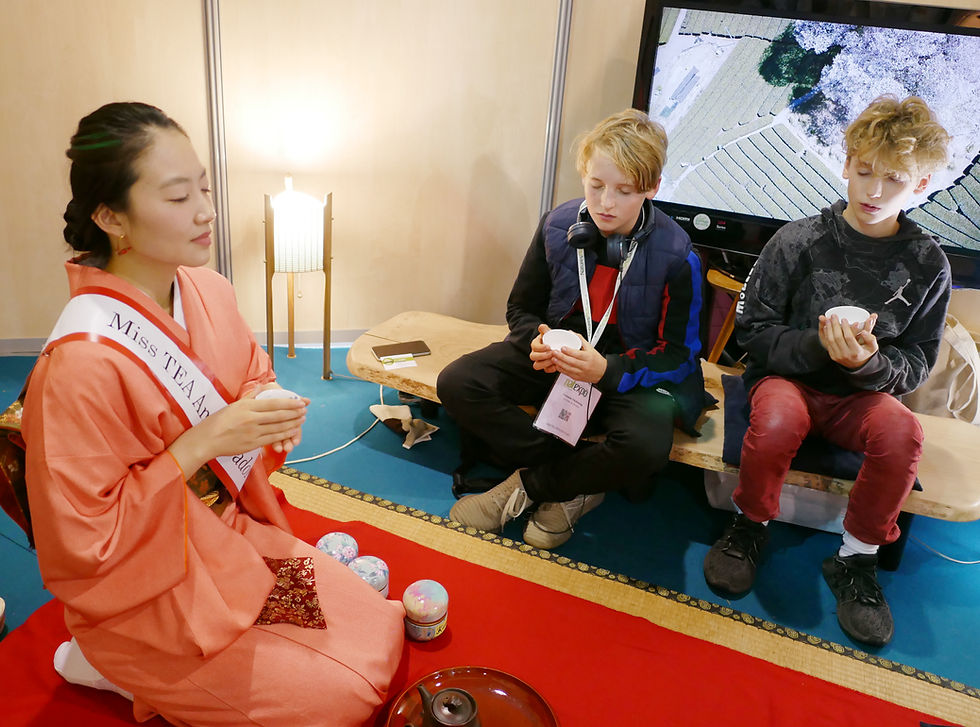
I was born into a family that ran a tea shop in Tokyo and grew up drinking delicious tea prepared daily by my grandmother, who was a master of the Sencha tea ceremony. Inspired by her, I later became a certified Senchado Master myself, following the same school.
After graduating from university, I spent two and a half years volunteering in East Timor-Leste, a developing country, as part of the Japan Overseas Cooperation Volunteers (JICA). Through the immense support I received from local people there, I came to deeply realise that the world is sustained through mutual help. At the same time, I felt strongly that the only people who can truly and fundamentally transform a country are those who live there.
With this understanding, I returned to Japan, deciding to devote my heart and energy to my own country. With a vision of expanding circles of connection between people and the world through Japannese tea, I founded Charin (now CHA-Link). However, upon returning to Tokyo, I was struck by how exhausted people looked on the trains and felt that genuine human connection could not exist in such a state. I came to believe that cultivating “yutori” (inner space and emotional ease) must come first.
From this insight, I developed a unique approach that combines Japanese Senchado with mindfulness — a way of preparing and serving tea that nurtures presence and calm. I began hosting tea gatherings to centre the mind at Zen temples in Tokyo, as well as delivering mindfulness-based programs and trainings for companies.
Today, I live in Okinawa with my husband. Beyond tea, I now work as an Ikebana Master, ink painting teacher, and certified psychologist. Through Japanese cultural arts, I share ways of accepting oneself as one truly is and living authentically, using social media and events as platforms to connect with others.

When did you first come across the word or idea of Ikigai? What does it mean to you today?
I feel that I somehow always knew the word Ikigai. It felt almost self-evident — something so essential that life would feel meaningless without it.
For me, Ikigai is an irreplaceable feeling or sensation that arises when each person lives authentically, following their heart. It’s the moment when you can truly feel, “This is why I was born.” It’s something deeply personal — a quiet, precious sense of meaning that cannot be replaced by anything else.

Do you feel you have one Ikigai or many? How have they shifted at different stages of your life?
I believe Ikigai can take many forms, depending on our life stages and the roles we inhabit. While being true to myself has always been a constant theme, the way that shows up — my form of expression — naturally changes as we grow.
At its core, my Ikigai has always been about connecting with the world. In the past, that connection came through Japanese tea; now, it has expanded into connecting with the world through Japanese culture as a whole.

How have your Japanese roots/your connection to Japan and your experiences abroad shaped your sense of Ikigai?
When you go abroad, you meet many people who deeply admire and respect Japanese culture, and through their eyes, you’re reminded of Japan’s beauty in ways you may not notice at home. Because of my overseas experiences, I feel I’ve been able to rediscover Japanese culture from an external perspective, even as a Japanese person myself.
In that sense, I sometimes feel like a “fan of Japanese culture,” which may be an unusual position to hold. Interestingly, when introducing Japanese culture to people overseas, I feel a childlike joy — free from judgment — because their curiosity is so pure. This has strongly shaped my Ikigai: connecting with the world in my own way through Japanese culture.

Can you tell us about a time when you felt lost, uncertain, or experienced a turning point? How did you find your way through?
About four years ago, I experienced a major setback when I became overly strict with myself and burned out. While I was already practising tea mindfulness and skilled at introspection, this actually made me more aware of my inner critical voice.
As I explored where that voice came from, I was led to confront unresolved issues from childhood, which was deeply painful. However, through this process, I came to accept myself at a fundamental level. This led me to study psychology more formally, return to university, research the role of tea ceremony in wellbeing, and ultimately become a qualified psychologist.

Are there small daily practices, rituals, or communities that help you stay connected to your Ikigai?
Although connecting with the world is my Ikigai, I believe that truly accepting others can only happen after we first honour and care for ourselves. For me, the most important practice is learning to respect, accept, and love myself. I do this through Japanese culture itself — it is through these cultural practices that I feel most able to fully embrace who I am.
Japanese has many beautiful words, phrases, and characters that are hard to translate. Is there one that holds special meaning for you, and why?
One Zen concept that resonates deeply with me is 中道 (Chūdō) — the Middle Way. It means choosing a way of being that is appropriate for the present moment, without leaning too far to either extreme.
It teaches us not to overexert ourselves, but also not to give up — instead, to live in balance and harmony. It’s a word that gently reminds me of the importance of a well-balanced, integrated way of living.

What did this story bring up for you? Comment below.
Saori's Reflection

Reading Rica’s interview felt like being gently guided into a space of quiet awareness — where tea, culture, and presence become gateways to deeper connection. Through her words, I sensed someone who has walked her path with sincerity, courage, and a profound respect for both inner and outer worlds.
What stayed with me most was her understanding of Ikigai as something lived, not sought. From her early immersion in Japanese tea culture to her time volunteering overseas, Rica’s journey reflects a deep belief in mutual support, balance, and living in harmony with one’s values. Her experiences abroad have not distanced her from Japan, but rather allowed her to rediscover its beauty through fresh eyes.
Rica’s work — blending Senchado, mindfulness, psychology, and Japanese cultural arts — feels like an invitation to slow down and return to oneself. Whether through tea gatherings, artistic expression, or quiet reflection, there is a steady message in her story: that caring for the self is the foundation for connecting meaningfully with others.
Her reflections gently remind us that Ikigai is not a single destination, but an ever-evolving relationship with the present moment — one that unfolds through balance, acceptance, and choosing a path that feels true, again and again.
Do you want to learn more?
If Rica’s story resonated with you, you can explore more of her work and ongoing activities below.
Mindfulness Tea Gatherings & Cultural Offerings
Rica hosts mindfulness tea gatherings in both Okinawa and Tokyo, creating spaces for reflection, presence, and reconnection through Japanese tea culture.
She also accepts requests for:
Mindfulness tea gatherings (in Japan and internationally)
Ink painting (墨画) workshops and commissioned works
Ikebana performances
Japanese cultural art collaborations and events
You can follow her work and upcoming offerings here:
📷 Instagram: @japan_wisdom
🌿 Website: cha-link.com
For enquiries or collaborations, please feel free to contact her directly:


Comments